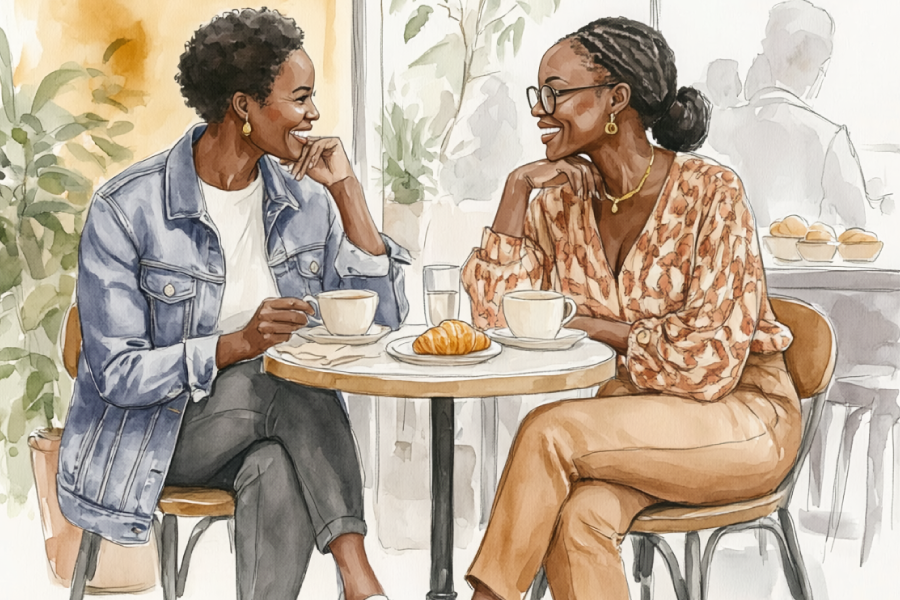
Every social occasion, formal or not, has its own dress code. While this may not always be a physical list of what you can and can’t wear, there are certain expectations depending on what the event is and where it is held. Finding a suitable outfit can be stressful, perhaps leading you to mutter ‘but what do I wear?’ as you rummage through your wardrobe.
New data from Chums reveals that UK shoppers purchased over 813,000 items in a single year, with dark, versatile colours like navy and black dominating wardrobes. The findings suggest that while trends may come and go, many people are prioritising practicality and ease when getting dressed day-to-day.
But why does it really matter what clothes you wear? There’s more to clothing than simply practical necessity or superficial interest. According to Philippa Brooks, a fashion buyer at Chums, “the clothes you wear affect how you perceive yourself, allowing you to make intentional outfit choices that both suit the occasion and make you feel confident.”
From the psychology behind clothing choices to what the data reveals about UK shopping habits, this blog will explore how fashion influences mood, confidence and social interactions. We’ll also share practical tips to help you choose outfits that feel right for any occasion.
In 2012, a study by Adam and Galinsky first introduced the term ‘enclothed cognition’ which is the influence of clothes on a person’s mental state. In their study, it was found that participants who wore a lab coat made half as many errors on an attention-focused task as those who didn’t. Lab coats are often associated with scientific focus and precision and those who wore them were able to step into that mindset, performing better at their tasks.
This concept can be applied to everyday life, for example at work. Research by Hays found that 70% of women have dealt with imposter syndrome at some point in their career, meaning many second-guess their abilities or minimise their achievements. Wearing formal ladieswear that counteracts these internal feelings and instead signifies authority and expertise can help women feel more confident in themselves and their capabilities. Dressing intentionally also allows you to establish boundaries between work, social and home life.
When dressing intentionally, it’s also worth considering the impact of wearing different colours, textures and patterns on mood. Finding an outfit that you feel comfortable and confident in can boost your mood, shown by the trend of ‘dopamine dressing’. This term was coined by Dr Dawnn Karen during the Covid pandemic to help people deal with isolation. Dopamine is a neurotransmitter in your brain, often linked to feelings of pleasure and the idea is that wearing a particular colour can evoke a positive emotion. For example, according to colour psychology, green is a soothing colour so it may help you feel more relaxed.
The same is true for different patterns and textures. In a 2025 study by Dubbiosi et al, it was found that velvet was strongly associated with feelings of happiness and relaxation and reduced feelings of boredom and sadness. Similarly, curved, interlocking patterns are often associated with feelings of security whereas angular, disjointed ones are linked to nervousness and instability.
Another key part of fashion psychology are fashion trends which reflect the current cultural landscape. Choices in colours and styles often mirror the overall mood at the time. For example, the current Y2K fashion trend is driven by nostalgia, which is often a coping mechanism in times of uncertainty and rapid cultural change.
These trends aren’t entirely organic. In fact, fashion trends are often forecast up to two years in advance, based on what experts predict people will be interested in. You may remember the iconic cerulean sweater monologue scene in the 2006 film The Devil Wears Prada. Fashion magazine editor-in-chief Miranda Priestly criticises the protagonist, Andy, for dismissing the fashion industry, pointing out that the cerulean colour of Andy’s sweater is actually the result of decisions made by designers long before it filtered down to high-street stores. She remarks that cerulean “represents millions of dollars and countless jobs”.
Cerulean blue was likely chosen for this scene because six years previously, it was the global colour authority Pantone’s very first ‘Colour of the Year’, which is meant to represent the current cultural zeitgeist. Global experts at Pantone’s Colour Institute analyse trends and shifts in everything from technology to fashion to political events all year around to determine where the world is heading and which colour represents that. Both high-end and high-street designers then incorporate this colour into their collections.
For example, cerulean blue was chosen in 2000 for the start of the new millennium. The serene colour represented hope and looking up to the sky on a clear, sunny day. This year, Pantone has chosen another calming colour ‘cloud dancer’ in response to the world’s current hectic state. The colour allows for stillness and reflection, offering tranquility and a ’blank canvas’ for a fresh start.
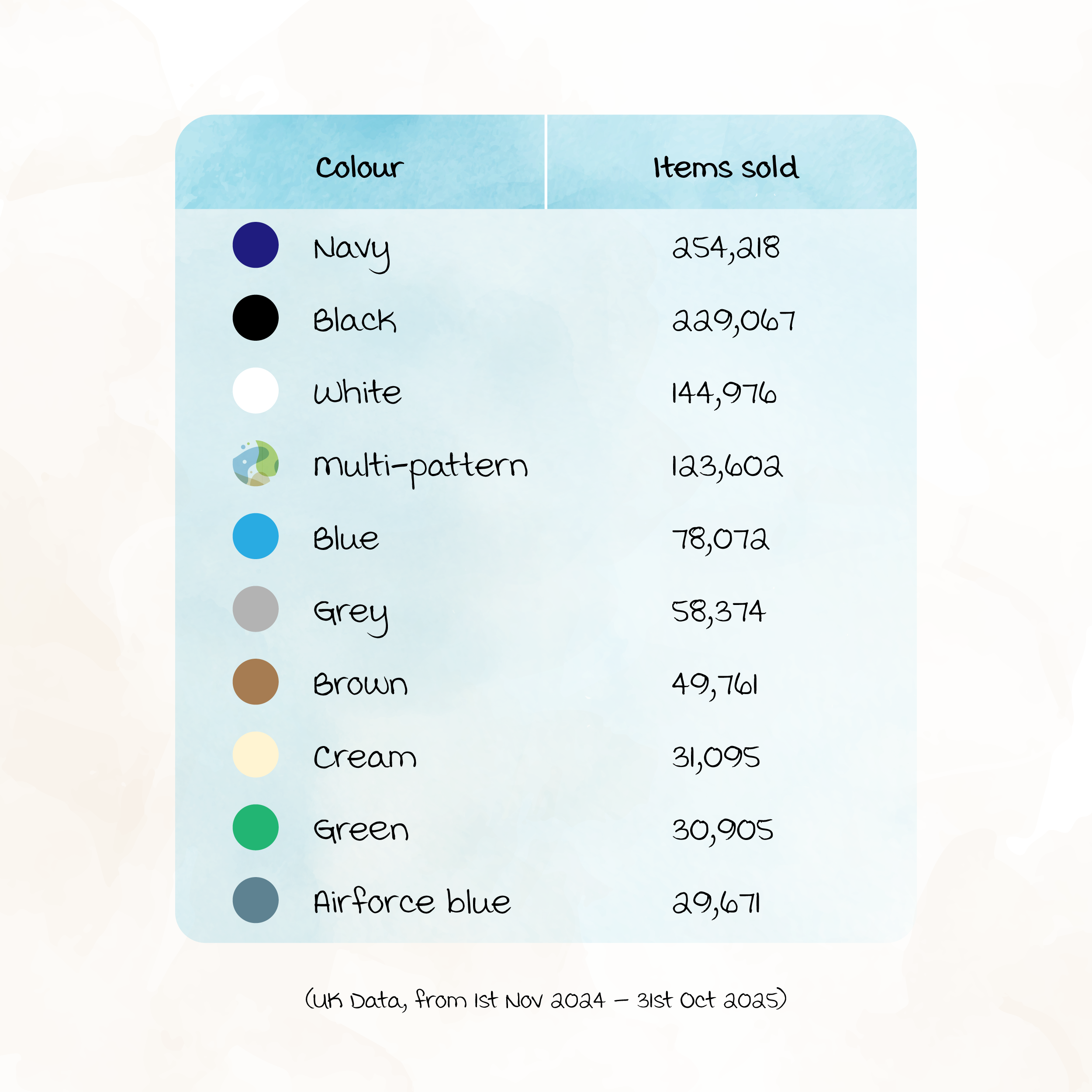
Fashion trends and ‘Colour of the Year’ makes sense in theory but how much does it actually affect which clothes people choose to buy? To answer this, we analysed Chums’ sales data from 1st November 2024 to 31st October 2025.
The 2025 Pantone Colour of the Year in 2025 was ‘mocha mousse’, a soft brown colour that evokes feelings of warmth and luxury. Other colour trends included butter yellow, light pink, baby blue and pale green. These pastel shades aren’t reflected in the top spots of Chums’ colour sales. In 2025, we sold over 250,000 navy items and almost 230,000 black items, making them our most popular colours by far. Chums’ fashion buyer Philippa Brooks explains, “dark neutrals like navy and black top the colour charts, significantly outselling brighter colours, suggesting that UK fashionistas favour practical classics that are versatile enough for all occasions.”
Wearing darker colours is common in countries with colder climates, such as the UK so it is not surprising that the most popular 2025 colour trend among our customers was brown, which accounted for almost 50,000 of items sold. Much like navy and black, brown is a more neutral, versatile colour - it just adds a little bit of warmth. While butter yellow and light pink aren’t as popular, another 2025 colour trend was green, which sold over 30,000 items.
According to the sales data, dark neutrals remain a firm favourite among UK customers. However, there are influences of the current trends in what people choose to purchase, such as brown and green. UK buyers also spend money on clothes, with menswear being the most popular product category sold, followed by ladieswear.
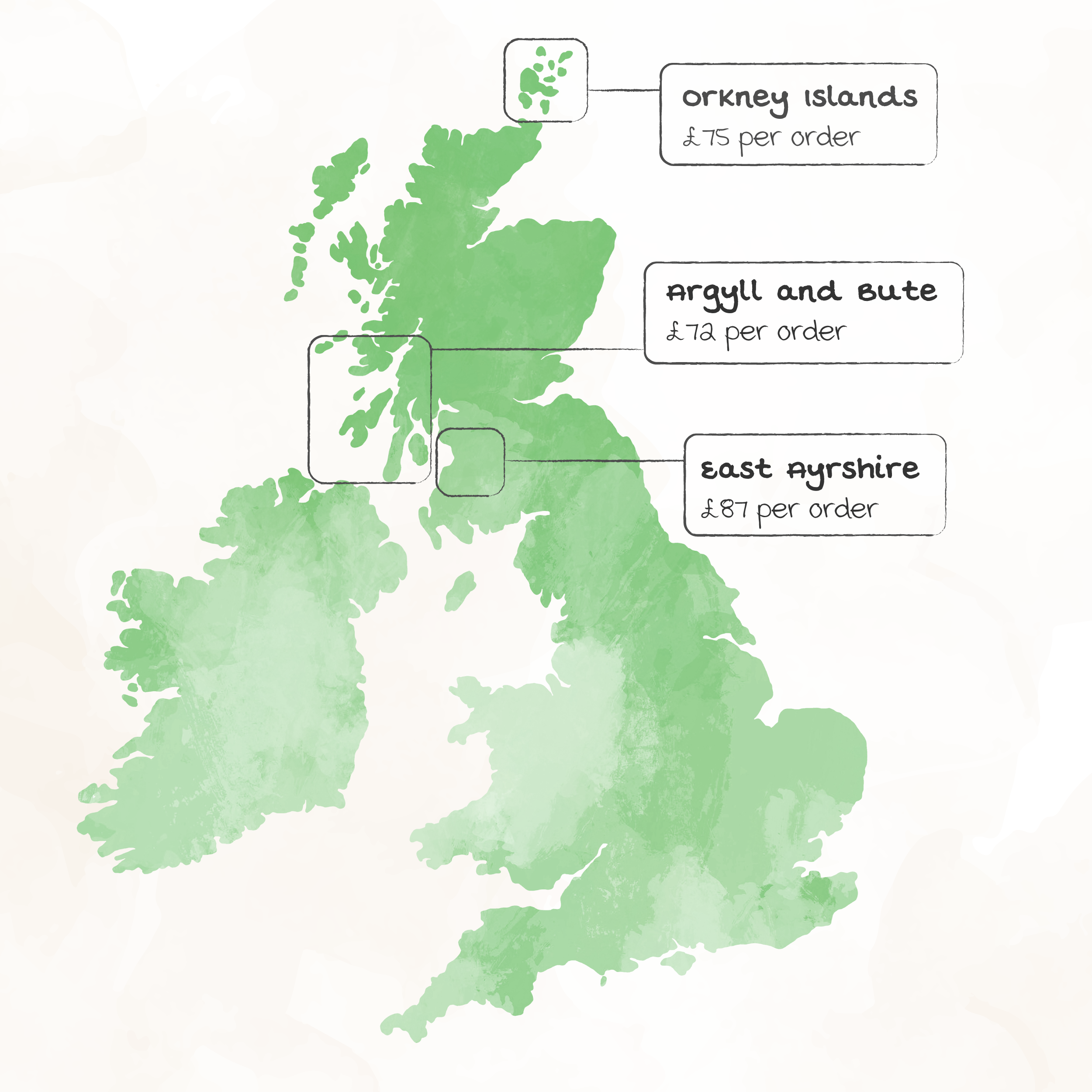
How much people spend varies from region to region. The county that placed the highest orders was Greater London, with nearly 18,000. Given the population, this isn’t surprising but interestingly, it isn’t the county spending most per order. The Outer Hebrides have the highest average spend per order at £115, followed closely by East Ayrshire at £110 and Orkney Islands at £108.
This shows how the county who orders the most isn’t necessarily the same as who spends the most. As Philippa Brooks explains, “though Greater London consistently has the highest number of orders, they’re not spending the most; multiple Scottish areas claim that crown, suggesting a more premium buying behaviour, with higher value purchases.”
Although the Orkney Islands has one of the highest spend per order rates, it also spends the most on discounted items. In 2025, customers from the Orkney Islands saved over £1,700 on their orders, making them the most spending savvy region of the UK. Following Orkney closely is another remote region, the Shetland Islands, which saved around £1,500.
Fashion choices can influence both how we feel and how we interact with others. Concepts like enclothed cognition and dopamine dressing show the impact clothing can have on your mood and confidence. When deciding what to wear for a social event, it therefore helps to think about the impression you want to create as well as the way certain colours, fabrics and styles might make you feel.
While everyday occasions rarely come with a written dress code, there are often still subtle expectations depending on where you’re going. Having a few reliable wardrobe staples, such as white t-shirts, crew neck sweatshirts and tailored trousers, can make it easier to build outfits that feel appropriate for a range of situations and help you feel your best.
To help you find your perfect outfit, we’ve created a guide that highlights a few common social occasions and the types of outfits that work well for each.
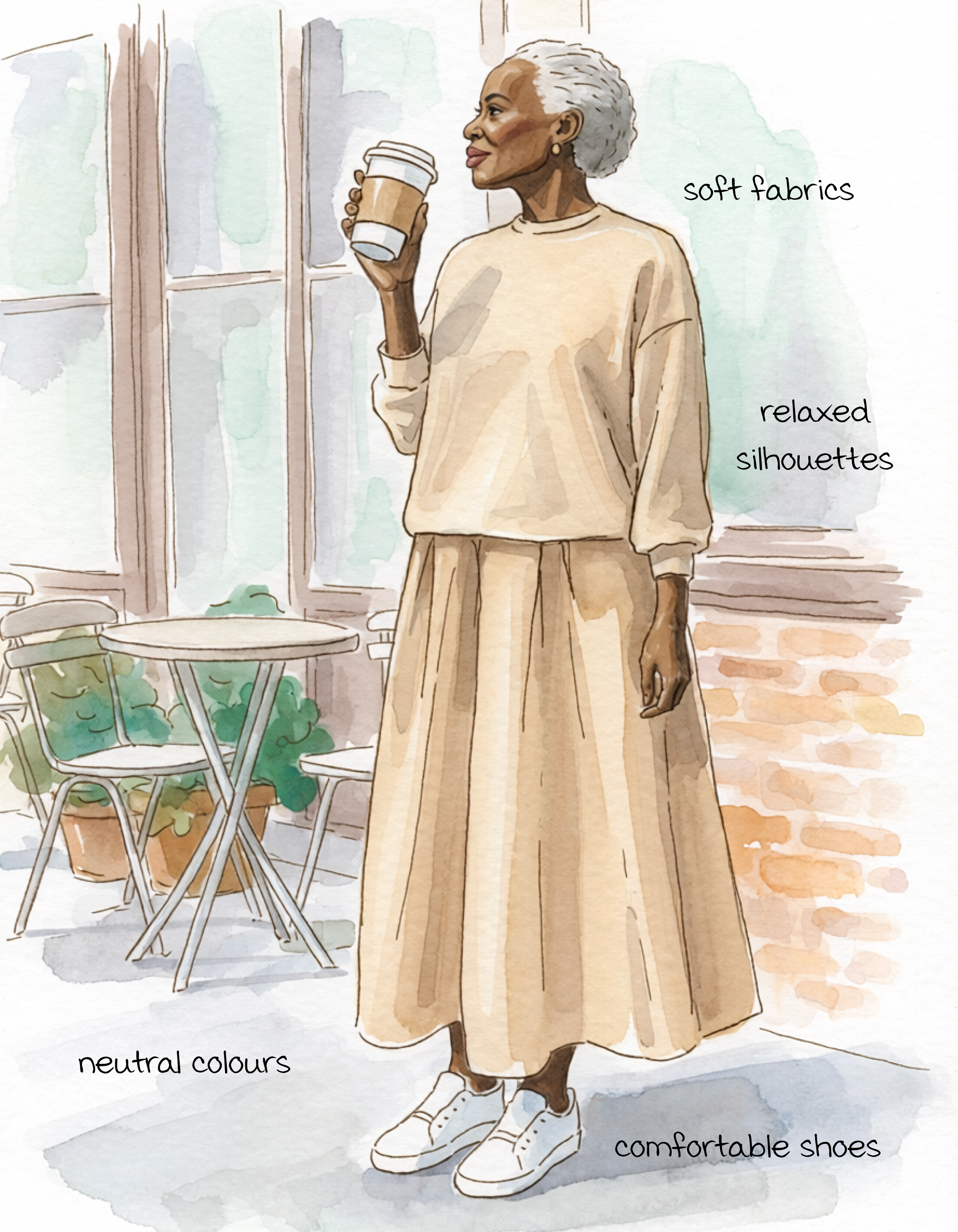
For informal catch-ups, comfort is key. Philippa Brooks explains that “when we wear things that are comfortable - not only in fit, but in colours that suit us and patterns that fit our personality - can boost our self-assurance, and make us feel more empowered.”
As you’re meeting up with people you know well, you can experiment to see what makes you feel good. For example, soft fabrics, relaxed silhouettes and easy layers help create an outfit that feels effortless while still looking put together. Knitwear, comfortable trousers or casual skirts and supportive footwear are ideal choices, particularly if you’ll be walking between cafés or shops. Neutral tones or gentle colours can help create a relaxed, friendly look that suits the laid-back nature of the occasion.
Family gatherings often call for an outfit that feels slightly more polished while still allowing you to move comfortably and enjoy the occasion. Well-fitting pieces in classic styles tend to work best here. Think tailored trousers, smart blouses, structured knitwear or elegant dresses paired with supportive shoes. Choosing timeless colours and simple accessories can help create a look that feels refined without being overly formal.
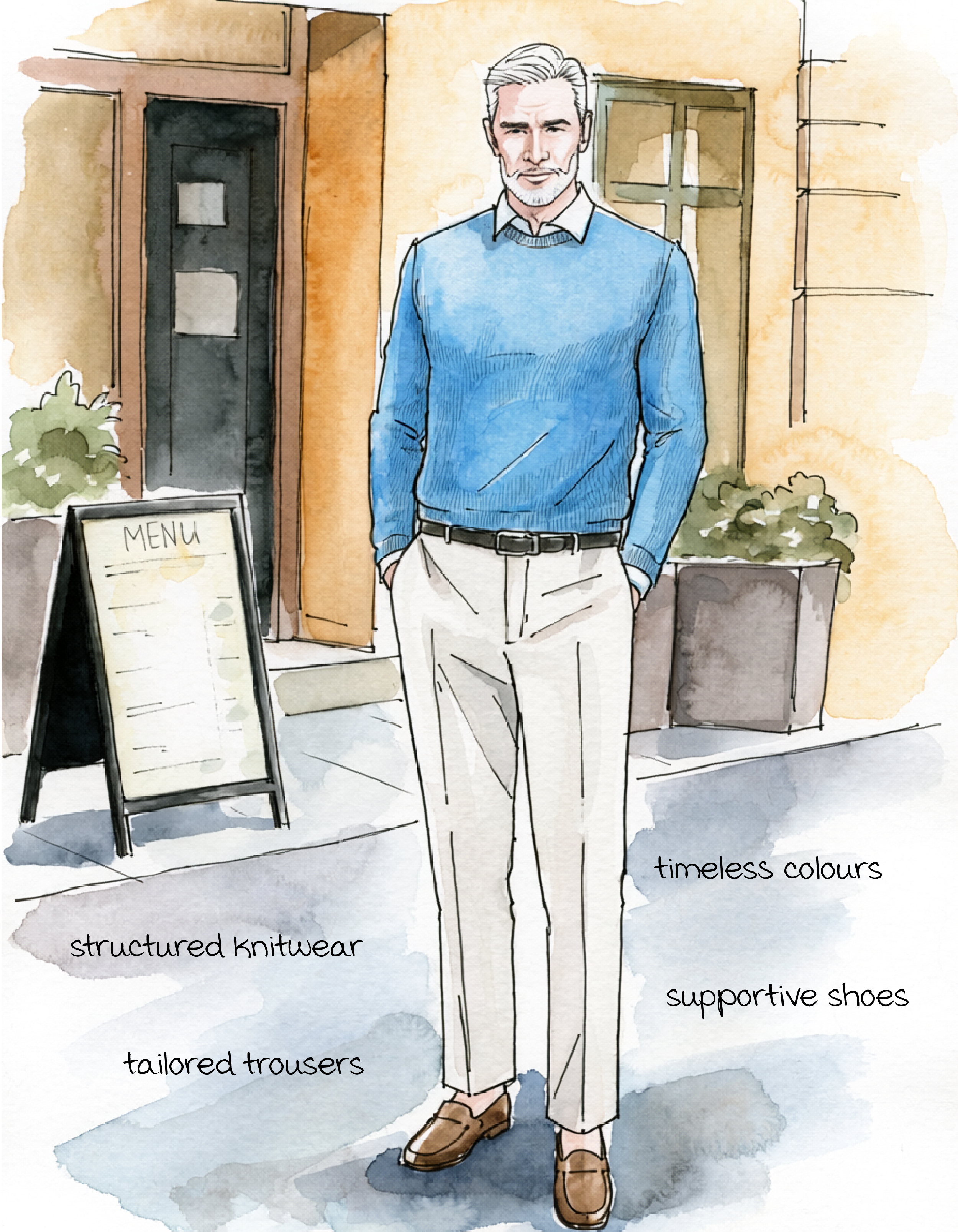
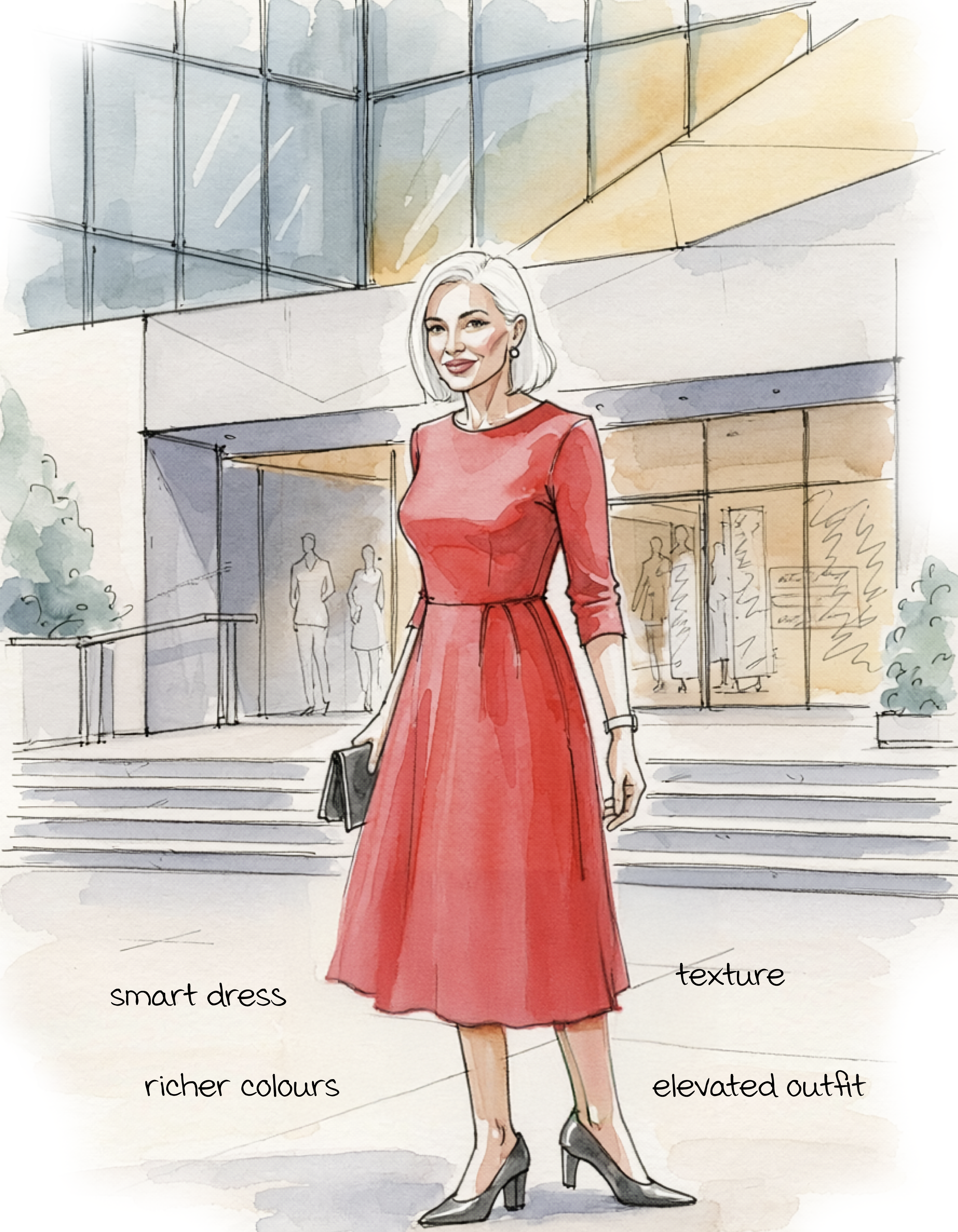
Events such as theatre trips, performances or celebratory evenings usually invite a slightly more elevated outfit. This is the opportunity to introduce statement elements, whether through richer colours, structured tailoring or eye-catching details. A smart dress, a well-cut jacket or bold accessories can help create a confident, occasion-ready look while still reflecting your personal style. Fabrics with a little texture or sheen can also add visual interest, helping your outfit feel special without sacrificing comfort.
Understanding dress codes can help you choose an appropriate outfit but confidence often comes from how your clothing makes you feel, not just how it looks. Before deciding what to wear for a specific occasion, it’s worth building a few simple habits that help you feel comfortable, prepared and self-assured in any setting.
Dressing intentionally and choosing clothes that suit you is not only fun but can also make a difference to your mood and confidence. Which outfit in your wardrobe makes you feel good? Let us know using #ConfidenceByChums.

See our privacy policy to understand how we process your data to send you marketing emails


Copyright © 2026 Chums